
传媒聚焦 | Xinhua News-ANTA's Ding Shizhong: The multi-brand logic behind becoming P
2026年10月16日,新华社发表《第一财经》对安踏集团董事局主席丁世忠独家专访《收购彪马背后的多品牌经营逻辑》的英文报道,全文如下:
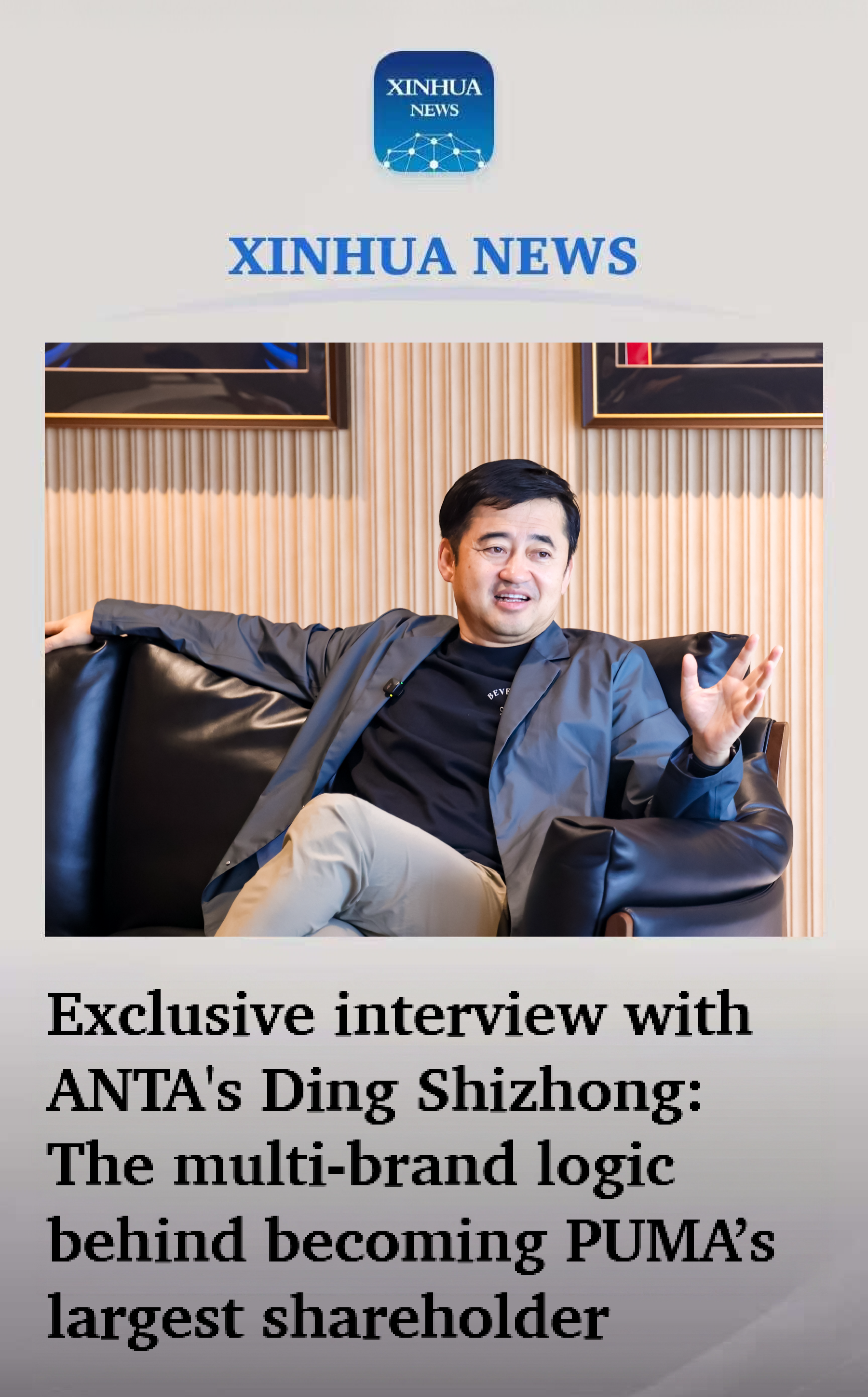
In recent years, as interest in fitness has surged, Chinese consumers have embraced fitness, running, hiking, and skiing, driving demand for a wide range of sportswear and equipment. Among the sports brands rising in this wave, Arc'teryx, Salomon, KOLON SPORT, and Descente stand out. They are also among the best-performing brands in Ding's acquired portfolio.
Over the past decade, this sporting goods company founded in Fujian has grown into the largest sporting goods company in China and ranks among the top globally, by continuously making the brands it acquires bigger and stronger. On October 7, ANTA Group announced the completion of its acquisition of a 29.06% stake in PUMA SE from Artémis SAS, the investment company of the Pinault family, for EUR 1.5055 billion in cash. Following the receipt of all relevant regulatory approvals and the satisfaction of customary closing conditions, ANTA Group is now the largest shareholder of PUMA.
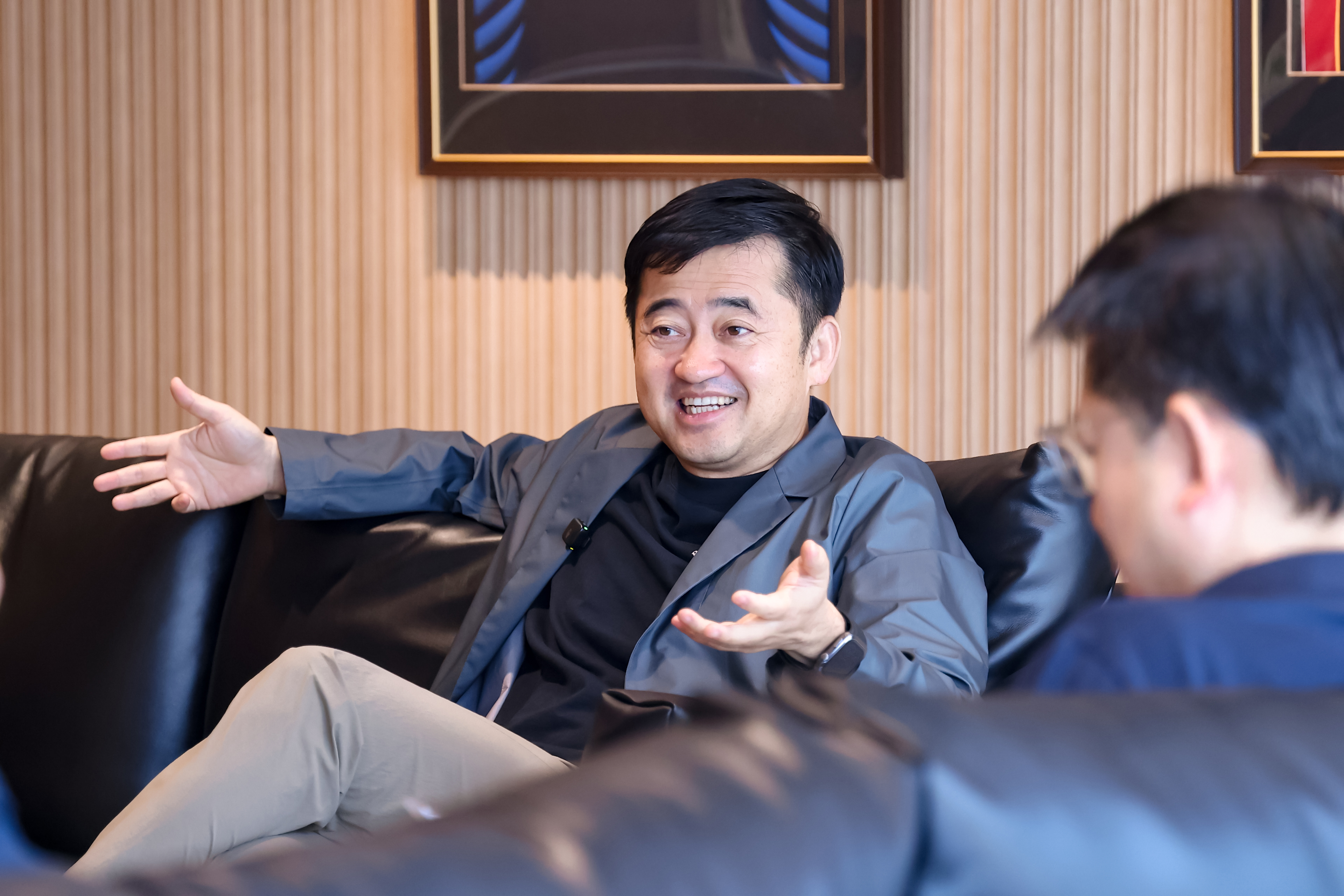
Recently, Ding Shizhong sat down for an interview at ANTA's Xiamen Operations Center. He explained in detail his understanding of the Group's multi-brand strategy and shared his insights on Chinese brands and the domestic consumer market.
The interview is as follows:
"Good brandsare rare opportunities."
Reporter: ANTA Group acquired a 29.06% stake in PUMA, becoming the largest single shareholder. Why did ANTA make such a move at this time?
Ding Shizhong: PUMA has very high brand value -- its brand equity, product portfolio and sporting heritage, and its global value chain. These strengths complement our global expansion strategy. ANTA doesn't have football; PUMA is very strong in football. PUMA also has strong motorsport and is quite strong in running and elite track-and-field technology. ANTA Group can help PUMA unlock greater market potential. We see tremendous potential in the brand.
We are a group built around multiple brands. The value of multiple brands is not about owning brand names and logos; our role is to empower these brands to revitalize themselves and unlock their potential. Through the Group's empowerment, we aim to unlock the value and potential of these excellent brands.
Reporter: How does ANTA plan to participate in PUMA's global governance?
Ding Shizhong: At this stage, we participate at the shareholder and supervisory board levels. Within the authority granted to PUMA's supervisory board, we can bring some successful management models to share and contribute to PUMA's future development. There will also be opportunities to support PUMA's development in the Chinese market and create more consumer value.
We respect PUMA's brand identity and heritage and preserve its independence and autonomy. Through our multi-brand shared capabilities and resources, we will jointly create long-term brand value. There are more details to be discussed in the future.
Unlocking the full potential of these products is no easy task. We have confidence in its management team and support the strategic transformation currently underway.
Reporter: Given all these difficulties, why does ANTA keep expanding its territory through brand acquisitions?
Ding Shizhong:Building a brand from scratch, especially a consumer brand, is extremely difficult. A brand has its own DNA, heritage and history, including the sporting culture it has built over time.
Looking back to 2009, when we invested in FILA, I was already thinking deeply about what drives a company's long-term growth. Businesses capable of weathering economic cycles often benefit from a large and strong domestic market. China now has that same advantage.
We also recognized that a single brand cannot easily meet the increasingly diverse and specialized needs of consumers, or serve every price segment and occasion. Consumer preferences vary significantly across regions, income levels and sporting activities. We have moved from a time when one pair of basic sneakers could serve almost every purpose to a market where sports are becoming increasingly specialized, niche brands are emerging, and consumers are looking for products that better reflect their individual needs and preferences.
Reporter: Is acquiring brands also a form of investment?
Ding Shizhong:Our investment in PUMA is fundamentally a value investment, grounded in a long-term perspective. Finding the right brand to invest in is a rare opportunity. I often tell our M&A team that no matter how many brands you evaluate, you cannot simply buy whichever one you want. When the opportunity to invest in the right brand finally comes along, there is a certain element of fate to it.
Of course, investing in a brand is only the beginning. The real challenge is what comes next -- repositioning and revitalizing the brand to unlock its full potential. Investing in a company does not mean accepting every aspect of its existing business. True management capability means having the courage to exit businesses that no longer create value and focus resources on those with the greatest potential. That is why, whenever we acquire or invest in a brand, we feel a responsibility to nurture it and do justice to the opportunity we have been given. This is something I care deeply about. I am proud that, since ANTA began acquiring brands in 2009, the more than a dozen brands in our portfolio have performed well. Their teams take pride in being part of ANTA Group and believe that, with the support of our strategy, management expertise and operating capabilities, their businesses are stronger today than they were before.
"Acquiring good brands is not a one-step process. It requires continual reassessment, and we must never lose the sensitivity of an operating business."
Reporter: But there are different voices about ANTA's M&A, arguing that ANTA relies on capital to "buy brands" to scale up.
Ding Shizhong: Whatever you do, there will be different opinions from the outside. I think that's normal. Some may even criticize us from different angles, which I can understand. But we must stay firm in our strategy and do what we should do.
We love these brands and are determined to manage them well for the long term. We are in the business of building and operating brands and must never lose our sensitivity to operating business. Acquiring these brands and helping them develop better -- the true value is a long-term endeavor, and brand value must be created through operational execution. After we acquire or invest in these brands, everyone can see whether their value is rediscovered, and whether their products get better compared to before the acquisition. These are the indicators that matter most in business management.
Today I can say clearly to everyone: every brand has gotten better after joining ANTA Group. This proves the Group's strategic positioning as a multi-brand operator and enabler. Only when each brand maintains healthy growth can the Group achieve long-term, high-quality, sustainable development.
Reporter: We've noticed that some acquired brands operate only in the Chinese market, while others are acquired globally. Why is that?
Ding Shizhong: Again, it all comes down to opportunity. Good brands are rare opportunities. Acquiring good brands is a process of building mutual trust over time, and continuously refining management models and operating and support standards, within long-term investment. It's like a sailboat heading for its destination: the goal is clear, the captain's goal is firm, but the captain must constantly adjust the rudder according to changes in weather, wind direction, waves, and crew conditions. Our past acquisitions, at different phases, with different equity structures, and based on conditions in China and global markets, have all required the right timing, circumstances and partners -- a matter of continual reassessment.
Reporter: How do you manage so many brands, and what role does the Group play in them?
Ding Shizhong: I define the Group as a manager focused on empowering its portfolio of brands. Of course, there isn't just one approach to supporting brands. For different brands, our governance structure, management model, and approach to supporting brands will all differ. We support these brands in different ways. The company has a set of management standards based on each brand's positioning and competitive landscape. We have regular channels of communication with the brands, and there are clear lines of responsibility.
We have developed our multi-brand model approach through hands-on experience and built a set of principles for managing and empowering brands. We sometimes say internally that our standard is not to impose a single standard: the better a brand performs, the less the Group intervenes. When a brand encounters difficulties, we step in to support it.
I always tell our management team that the Group must be clear about what it should manage and what it should leave to individual brands. Decision-making responsibilities must be clearly defined. The Group aligns on strategy, oversees risk and provides shared services and support in strategic planning, supply chain, logistics, IT and talent development. But we do not interfere in day-to-day brand operations. Reaching agreement on strategy is not the same as controlling a brand; it means aligning our goals. Our brands must also occupy distinct positions rather than compete unnecessarily with one another. Even as we grow, we must remain agile, guard against bureaucracy, stay close to the market and keep challenging ourselves.
"We need to redefine performance sports"
Reporter: But there are different voices about ANTA's M&A, arguing that ANTA relies on capital to "buy brands" to scale up.
Ding Shizhong: Whatever you do, there will be different opinions from the outside. I think that's normal. Some may even criticize us from different angles, which I can understand. But we must stay firm in our strategy and do what we should do.
We love these brands and are determined to manage them well for the long term. We are in the business of building and operating brands and must never lose our sensitivity to operating business. Acquiring these brands and helping them develop better -- the true value is a long-term endeavor, and brand value must be created through operational execution. After we acquire or invest in these brands, everyone can see whether their value is rediscovered, and whether their products get better compared to before the acquisition. These are the indicators that matter most in business management.
Today I can say clearly to everyone: every brand has gotten better after joining ANTA Group. This proves the Group's strategic positioning as a multi-brand operator and enabler. Only when each brand maintains healthy growth can the Group achieve long-term, high-quality, sustainable development.
Reporter: We've noticed that some acquired brands operate only in the Chinese market, while others are acquired globally. Why is that?
Ding Shizhong: Again, it all comes down to opportunity. Good brands are rare opportunities. Acquiring good brands is a process of building mutual trust over time, and continuously refining management models and operating and support standards, within long-term investment. It's like a sailboat heading for its destination: the goal is clear, the captain's goal is firm, but the captain must constantly adjust the rudder according to changes in weather, wind direction, waves, and crew conditions. Our past acquisitions, at different phases, with different equity structures, and based on conditions in China and global markets, have all required the right timing, circumstances and partners -- a matter of continual reassessment.
Reporter: How do you manage so many brands, and what role does the Group play in them?
Ding Shizhong: I define the Group as a manager focused on empowering its portfolio of brands. Of course, there isn't just one approach to supporting brands. For different brands, our governance structure, management model, and approach to supporting brands will all differ. We support these brands in different ways. The company has a set of management standards based on each brand's positioning and competitive landscape. We have regular channels of communication with the brands, and there are clear lines of responsibility.
We have developed our multi-brand model approach through hands-on experience and built a set of principles for managing and empowering brands. We sometimes say internally that our standard is not to impose a single standard: the better a brand performs, the less the Group intervenes. When a brand encounters difficulties, we step in to support it.
I always tell our management team that the Group must be clear about what it should manage and what it should leave to individual brands. Decision-making responsibilities must be clearly defined. The Group aligns on strategy, oversees risk and provides shared services and support in strategic planning, supply chain, logistics, IT and talent development. But we do not interfere in day-to-day brand operations. Reaching agreement on strategy is not the same as controlling a brand; it means aligning our goals. Our brands must also occupy distinct positions rather than compete unnecessarily with one another. Even as we grow, we must remain agile, guard against bureaucracy, stay close to the market and keep challenging ourselves.
"The ANTA brand must win"
Reporter: I've heard that you often state at internal meetings that the ANTA brand must win. We know that in reality, group resources, management attention, and channel focus are all limited, and competition for resources between the ANTA brand and acquired brands is inevitable. Against this backdrop, how does it win?
Ding Shizhong: I have always emphasized that no matter how many brands we have in our portfolio, the ANTA brand itself must succeed. It remains our largest individual brand, with retail sales exceeding RMB 45 billion in 2025.
In many ways, our multi-brand strategy has actually strengthened the ANTA brand. What was once a relatively limited pool of resources has now expanded into a much broader network of capabilities, including supply chains, retail partners and organizational expertise. The ANTA brand can benefit from the resources and experience we have built across the Group.
As I have said in our internal meetings, the ANTA brand represents the strength of China's professional sports industry, the foundation of our Group and the values on which we were founded. For me, the success of the ANTA brand is one of the most important measures of what Chinese companies can achieve on the global stage.
That is why I am personally spending more time driving the ANTA brand's transformation. We will continue to devote greater resources to its development, including more time and attention from myself and the Group's senior leadership team.
Reporter: What specific approach will you take?
Ding Shizhong: We have several clear priorities for the ANTA brand. First, we must stay firmly committed to our positioning as a mass-market sports brand. Second, while continuing to serve consumers in China well, we will leverage our global resources and capabilities to bring the ANTA brand to more international markets. Third, we will step up investment in research, development and innovation. We have already made significant breakthroughs in product innovation, and we intend to build on that progress. Fourth, ANTA will remain firmly committed to supporting the development of sports in China. Our roots are in China, and our growth has always gone hand in hand with the development of sports in the country.
But growth should never be pursued for its own sake. What matters is achieving high-quality, sustainable growth. As we expand, we must also reduce inventory levels and improve operating efficiency and profitability. Beyond financial performance, another important measure of high-quality growth is whether we are earning greater respect from consumers for our brand.
Reporter: Technological innovation requires long R&D cycles and heavy investment, on the other hand, increasing sponsorship or brand exposure often delivers results faster. In actual operations, how do you view the relationship between long-term R&D investment and short-term returns from marketing exposure?
Ding Shizhong: Over the past decade, ANTA Group has invested more than RMB 20 billion in research and development. As early as 2005, I spearheaded the establishment of the industry's first sports science laboratory. Since last year, we have also committed several billion yuan to developing the ANTA Global Innovation Industrial Park, which will bring together world-class sports science research and innovation capabilities. I firmly believe that, ultimately, competition among sports brands is not about marketing reach, distribution channels or acquisitions. It comes down to innovation in sports science and technology, including biomechanics and ergonomics. Building world-class sports science research capabilities is fundamental to ANTA's commitment to long-term thinking, product-led growth and excellence in sports performance.
ANTA supported the Chinese Olympic Committee for 16 consecutive years between 2009 and 2024, demonstrating our unwavering commitment to the development of sports in China. At the Aichi-Nagoya Asian Games, China's national teams won 169 gold medals, with 43% of those medals earned by athletes from the 20 national teams sponsored by ANTA. This is a powerful demonstration of the value of sports science and product innovation.
I see many outstanding Chinese companies achieving remarkable success across different industries. I firmly believe that Chinese entrepreneurs have the capabilities to lead and manage global businesses, and that China's leading companies can become global industry leaders. As ANTA Group continues to expand internationally, we have every opportunity to develop world-class products, deliver world-class design and build brands that create lasting value for consumers around the world.
"Do what we should do"
Reporter: There is a widely circulated story that at age 17, you took 600 pairs of shoes from your family's factory and went alone to Beijing to open up the market. Is this story true? What was the situation at the time? How did this experience influence you?
Ding Shizhong: Early experiences leave a lasting imprint. The first thing you do and the first world you see when you're young have a huge impact later on. Before I was 17, I had never even been to Fuzhou, the capital city of Fujian Province. In a sense, it was China's reform and opening-up that made our generation -- we had seen little, but we were full of imagination and dared to venture out and do things. Through that process, we gradually formed our values.
At the time, many people in Jinjiang (a manufacturing hub in Fujian Province) ran shoe factories, including my father. Most people looked at Jinjiang from Jinjiang. After I went to Beijing at 17, I started looking at Jinjiang from Beijing, and the perspective was completely different. That entrepreneurial experience of going north taught me the hardships of running an operating business, the realities of the market, the value of brands, and the importance of persistence in achieving things. In 2003, I attended a Peking University training program for private entrepreneurs, where I systematically studied modern corporate governance theory for the first time, giving me my first systematic understanding of modern enterprise management. I also formed a lifelong entrepreneurial belief: "Many people who succeed in the world are not necessarily better than you at doing things -- they are simply braver than you." Daring to venture, to try, and to reform -- this is the key character trait I have seen in entrepreneurs who break through.
Reporter: As a leading domestic company, you will be under intense public scrutiny for a long time. How do you view this? What kind of social responsibility do you think companies should shoulder?
Ding Shizhong: I believe that as a company grows, its corporate culture is shaped by the values and beliefs of its founder. ANTA has grown from a small business into an industry leader with an expanding global presence. Along this journey, we have come to recognize that building a successful company is about more than just financial performance. It is equally important to reflect on the broader value we create as a business.
Back in 2008, I set out a vision for ANTA to become a company that is respected. I believe respect comes from doing business well. For us, as a consumer products company, that starts with making great products and delivering genuine value to consumers. A company must first build a strong and successful business before it can create lasting social value. If the business itself is struggling, it is difficult to sustain meaningful philanthropic efforts. The stronger the business, the more we can give back.
Our commitment to philanthropy is also firmly rooted in long-term thinking. Our family established the Hemin Foundation, with an endowment of RMB 10 billion. We also committed RMB 2 billion to building a public hospital in Jinjiang in partnership with Shanghai Sixth People's Hospital. The hospital will serve as a national regional medical center and is expected to open in the near future.
There will always be praise, questions and criticism. Whether praised or criticized, ANTA Group stays true to its original aspiration and focuses on its own business. I believe that a company's social responsibility, and an entrepreneur's sense of purpose, should not be driven by the desire for external approval. What matters is staying true to our values, doing what we believe is right, and having the conviction to keep doing it over the long term.
Reporter: The Group's multi-brand portfolio is already international. How will the ANTA brand expand overseas? Does the globalization of our multi-brand portfolio create opportunities or challenges to the ANTA brand's overseas expansion?
Ding Shizhong: Building a global company and taking a brand global are different, but closely connected. For a company, globalization is about building the management capabilities to operate internationally -- in organization, talent, R&D, supply chain, digital systems and governance. Since our listing in 2007, we have worked to build ANTA to the standards of a global company. For a brand, globalization is about connecting with consumers in different markets and earning their trust.
Our approach is to use the globalization of our business to support the globalization of the ANTA brand. Through our international portfolio, we develop talent, R&D, supply chain, distribution and local operating capabilities. We then draw on those capabilities to help the ANTA brand reach consumers around the world. Our global multi-brand strategy does not replace the ANTA brand's own international expansion; it supports it. Ultimately, we want ANTA, a brand born in China, to earn the respect of consumers worldwide. That is our approach to going global.
Reporter: ANTA has been founded for 35 years. Looking back on navigating multiple cycles, if you could give one piece of advice to ANTA ten years ago when it had just crossed 10 billion yuan, what would you say? Looking to the next decade, what is ANTA's vision? How far do you think ANTA is from becoming "the World's ANTA"?
Ding Shizhong: I would say that a company must always stay true to its values and strategy, and remain focused on doing what it believes is right. Over the years, many friends have said to me, “You know, Ding, when you talked about your ambitions and vision more than 20 years ago, I thought you were joking. Your vision may have evolved over time, but at every stage, you've managed to deliver on what you set out to achieve.” Looking back, I would describe ANTA's development as a journey through different stages, each with its own mission and strategic priorities. I call this my “phased approach” to business development. It is a philosophy that has guided me since I first started out as an entrepreneur at the age of 17.
In my view, ANTA Group has already become “the World's ANTA,” particularly when it comes to corporate globalization. As I mentioned earlier, there is a distinction between building a global company and building a global brand. From the perspective of corporate globalization, we have already established a global presence, with an international governance and shareholder structure, organizational capabilities and operations spanning multiple markets.
One thing I have been emphasizing recently is the importance of earning respect -- respect from consumers and respect around the world. I believe this is essential for any company that aspires to build a successful and enduring business.
To me, corporate culture should serve three goals: strong business performance, employee recognition and respect from society. But the underlying principle never changes: creating genuine value for consumers through our products. We must remain committed to long-term thinking and unwavering optimism, stay grounded in the business of making and selling great products, and always put consumers first. Ultimately, our ambition is to build a company that earns respect around the world.